Glade did it at $48K/mo. Parnell did it at 652 units.
- July 28, 2026
-
Posted by: admin
-
 0 Comment


 0 Comment
Guest Post by Stack Influence
Two brands at opposite ends of the catalog. One external-traffic lever.

One brand was stuck at 652 units a month. The other was already doing $48K a month.
Opposite ends of the catalog. Opposite problems. Both ran the same play on Amazon, and both climbed.
If you have ever wondered whether external traffic actually moves the needle for your situation, these two campaigns bracket the answer.
Case 1: the stuck product
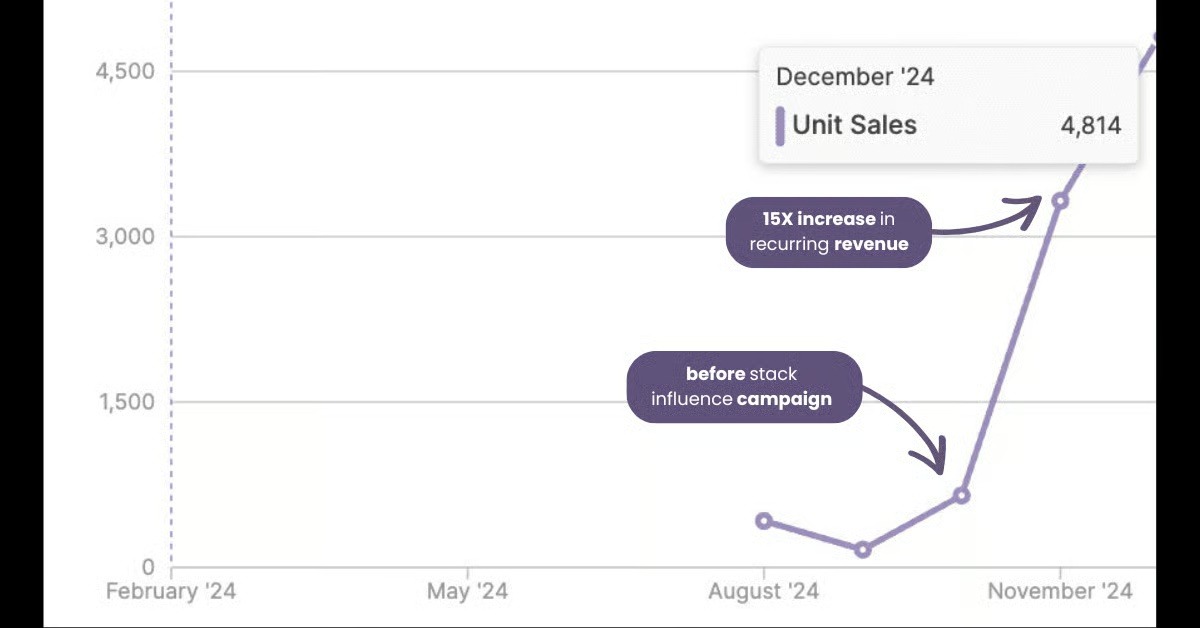
A proven makeup product from Parnell was flat at 652 units a month. Good product, real reviews, and still buried in search with velocity too soft to climb.
No ad budget increase. No PR agency. They activated nearly 200 micro-influencers who bought the product on Amazon with their own accounts, tried it, and posted about it – without a cent in cash fees.
Three months later:
→ 7.3X monthly sales (652 → 4,814 units/mo)
→ 4.7X ranking jump in Beauty & Personal Care (#34,871 → #7,312), and #198 → #80 in Foundation Makeup
→ $161,966 in revenue at a 12X return on the campaign
→ 206,000+ social impressions plus full rights to every photo and video
Case 2: the established seller
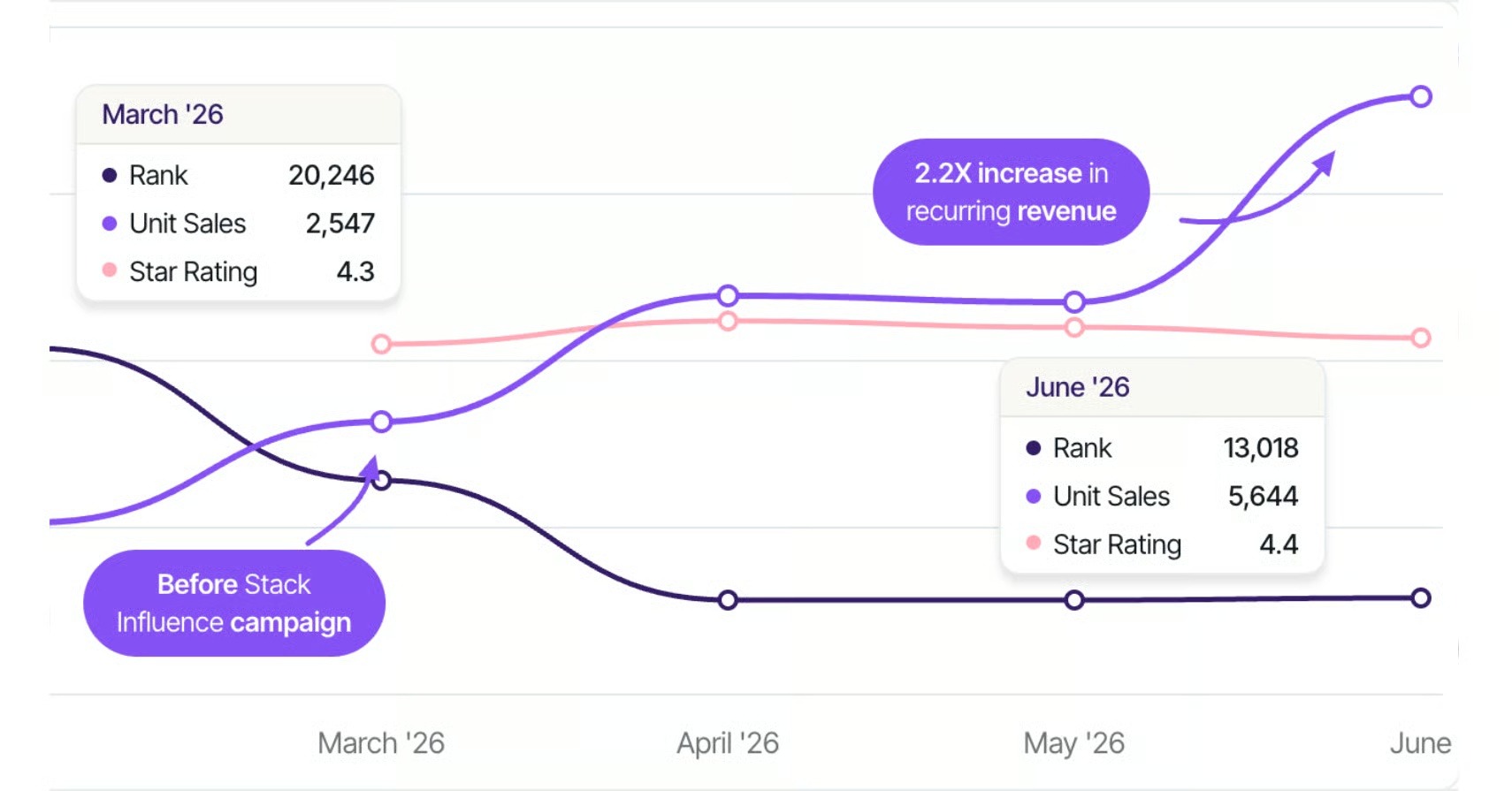
Now the other end. Glade is a household name with loyal buyers, already moving 2,547 PlugIns air fresheners a month. The problem was not awareness. It was that steady-but-flat velocity left the listing ranked deep in Health & Household, and the brand had a thin pipeline of current, relatable social proof to convert new shoppers.
They ran 294 creator promotions through the same model: real people buying the product on Amazon, trying it, and posting.
Three months later:
→ 2.2X monthly unit sales (2,547 → 5,644 units/mo)
→ 1.6X bestseller rank lift in Health & Household (#20,246 → #13,018)
→ $48K/month scaled to a $1.3M annual revenue run rate
→ 492K impressions and 176 testimonials at a 60% testimonial conversion rate, with the star rating ticking up from 4.3 to 4.4
And velocity was still accelerating past the campaign window, which is the part paid traffic never gives you.
Same lever, both ends of the shelf
Parnell was fighting for discovery. Glade was defending shelf position. The mechanism that moved both was identical: real purchases from real people, driving external traffic that Amazon reads as genuine demand and rewards with organic rank.
That is the whole point. It is not a launch tactic or a rescue tactic. It is a velocity lever that works on a stalled ASIN and a category leader alike.
Why this works differently than what you’ve tried
Most influencer programs bleed cash. You negotiate rates, pay $300 to $1,000 per post, and hope the content moves product.
Stack Influence flips that model. Creators purchase your product on Amazon using their own accounts, then share authentic UGC on social. You keep the content rights. You keep the ranking boost. And you pay zero cash fees.
It is how brands like Magic Spoon, Unilever, and MaryRuth Organics hold page-1 positions and compound organic revenue month after month.
What you get
• Zero influencer cash fees – product-only compensation, no rate negotiations
• Unlimited, fully-licensed UGC – photos and video you own and can repurpose everywhere
• 175+ hours/month saved – sourcing, outreach, and fulfillment all automated
• Built-in affiliate pipeline – convert your best creators into long-term revenue partners
This month only: 10% bonus
Start a campaign in the next two weeks and save 10%, plus a free listing audit call to map the play to your catalog. Put that budget toward inventory, because you are going to need it.
Book an audit call & claim 10%
PPC only gets more expensive. The sellers who win the next year are the ones building rank they don’t have to keep paying for.
Comments